How Credit Repair Works
A Clear, Compliant Process Built Around You
We analyze your credit reports, identify questionable items, and dispute them using a transparent, step-by-step process designed to improve your credit health.
How Credit Repair Works
We analyze your credit reports, identify questionable items, and dispute them using a transparent, step-by-step process designed to improve your credit health.
Our proven methodology has helped thousands improve their credit scores. Here's exactly how we do it.
Connect with our credit experts for a no-obligation 15-minute consultation. We'll discuss your situation and create a custom plan.
We pull your credit reports from all three bureaus and conduct a thorough analysis of every item affecting your score.
We file compliant dispute letters to challenge inaccuracies directly with credit bureaus and creditors on your behalf.
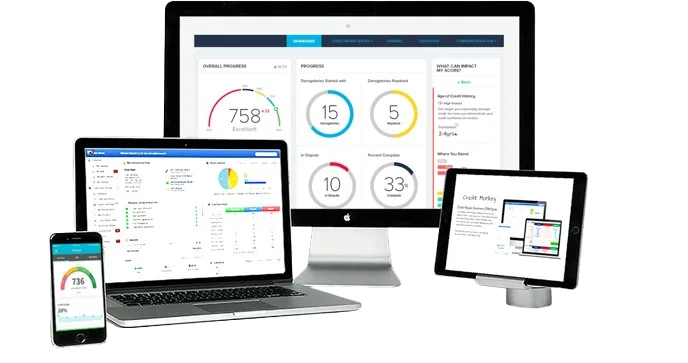
Track your progress in our secure client portal and watch your credit score improve month after month with real results.
Credit repair is the process of identifying and disputing inaccurate, incomplete, outdated, or unverifiable information on your credit reports with the goal of improving your credit score. It is a federally protected consumer right under the Fair Credit Reporting Act.
Many people assume credit repair is a legal gray area or a scam industry. It isn't — but the industry is heavily regulated precisely because deceptive players exist. Legitimate credit repair involves:
Two federal statutes form the legal foundation of all credit repair in the United States:
Enacted 1970 · Governs credit bureaus & creditors
Enacted 1996 · Governs credit repair companies
Together, these laws create a framework where consumers have enforceable rights and credit repair companies face strict accountability. Violations of either law can result in civil lawsuits, FTC enforcement actions, and statutory damages.
The FCRA grants every U.S. consumer a robust set of rights regarding their credit information. Understanding these rights is the foundation of any credit repair effort:
You're entitled to one free credit report from each bureau per year at AnnualCreditReport.com (the only federally mandated free source). During COVID-19, the bureaus extended free weekly access — currently, Experian offers free monthly reports, while all three offer free access through their own platforms.
Under FCRA § 611, you have the right to dispute any item you believe is inaccurate, incomplete, or unverifiable. The bureau must:
FCRA § 623 also allows you to dispute directly with the data furnisher — the original creditor or collection agency — bypassing the credit bureau entirely. Furnishers must investigate direct disputes within 30 days and cannot continue reporting information they know to be inaccurate.
If a bureau or furnisher willfully violates the FCRA, you can sue for actual damages, statutory damages of $100–$1,000 per violation, punitive damages, and attorney's fees. This enforcement right is what gives the FCRA its teeth.
| Negative Item Type | Maximum Reporting Period | Starting From |
|---|---|---|
| Late payments | 7 years | Date of first delinquency |
| Collections / charge-offs | 7 years | Date of original delinquency |
| Chapter 13 bankruptcy | 7 years | Filing date |
| Chapter 7 bankruptcy | 10 years | Filing date |
| Hard inquiries | 2 years | Date of inquiry |
| Tax liens (paid) | 7 years | Date of payment |
| Civil judgments | 7 years | Date of entry |
The Credit Repair Organizations Act exists because the credit repair industry has historically attracted bad actors. CROA sets strict rules to protect consumers. Here's a clear breakdown:
Before any credit repair company begins work, they must provide you with a written contract that includes: a full description of services, the total cost, the estimated timeframe, their legal name and business address, and a notice of your right to cancel within 3 days without penalty.
Here is exactly how a legitimate credit dispute proceeds under the FCRA:
Pull all three reports from Equifax, Experian, and TransUnion at AnnualCreditReport.com. Each bureau operates independently — an error on one report may not appear on all three. You must dispute with each bureau separately.
Review each report line by line. Look for: accounts you don't recognize (possible identity theft), wrong balance amounts, incorrect payment history, duplicate accounts, accounts past their 7-year reporting period, wrong personal information (name, address, SSN), and accounts discharged in bankruptcy still showing as active.
Prepare a written dispute letter (online or by mail) that clearly identifies: the specific account in dispute, the reason it's inaccurate, and what correction you're requesting (delete, correct, update). Include supporting documentation — statements, payment confirmations, court orders, or identity theft reports.
You can dispute online (fastest), by mail (certified mail with return receipt — creates a documented record), or by phone (least recommended — harder to track). For maximum legal protection, dispute by certified mail so you have a timestamped record of delivery.
The credit bureau forwards your dispute to the data furnisher (original creditor or collection agency) along with all supporting documents you submitted. The furnisher investigates and reports back to the bureau within the 30-day window.
One of three outcomes occurs: (a) the item is verified and remains, (b) the item is corrected, or (c) the item cannot be verified and must be deleted. The bureau sends written results within 5 business days of completing the investigation.
If you believe the investigation was inadequate, you can: dispute directly with the furnisher under FCRA § 623, file a complaint with the Consumer Financial Protection Bureau (CFPB) at consumerfinance.gov, or consult with a consumer rights attorney about potential FCRA violations and litigation.
There is no honest one-size-fits-all answer — but here is a realistic timeline based on the type of issue being resolved:
The FTC has pursued hundreds of credit repair fraud cases. Here are the most common red flags — any one of these should cause you to walk away:
CROA explicitly prohibits upfront fees. Legitimate companies charge only after performing the agreed service. Monthly subscription models are lawful only if services are delivered each month before billing.
No company can guarantee a specific credit score increase. Scores depend on multiple factors and bureau responses. Any guarantee is both legally prohibited under CROA and factually impossible to promise.
This scheme — often marketed as a "Credit Privacy Number (CPN)" or "Secondary Credit Number (SCN)" — involves using an EIN or stolen SSN as a fake identity. It is federal fraud (18 U.S.C. § 1028) and can result in criminal prosecution for both the company and the consumer who uses it.
Mass-disputing accurate information is considered frivolous by credit bureaus. They will mark it as such and stop investigating. This strategy wastes time, may flag your file, and is not a legal credit repair method.
Accurate bankruptcy records cannot be removed. Anyone claiming otherwise is lying. Chapter 7 stays for 10 years; Chapter 13 for 7 years.
CROA requires a written contract before services begin. You have 3 days to cancel with zero penalty. If a company refuses either, it is operating illegally.
Report credit repair fraud to the FTC at ReportFraud.ftc.gov, the CFPB at consumerfinance.gov/complaint, and your state attorney general's office.
California consumers enjoy some of the strongest credit protections in the nation, layered on top of federal FCRA and CROA protections:
California's version of CROA goes further than federal law in several areas: it requires credit services organizations to register with the California Attorney General, post a surety bond, and comply with specific disclosure and contract requirements. California credit repair companies must be fully registered under the CCSA.
California residents have the right to know what personal data credit-related businesses collect, the right to delete personal information, and the right to opt out of data sales. This applies to data brokers who may hold financial data that affects your credit profile.
Under California AB 504, effective July 1, 2022, medical debt from nonprofit hospital charity care programs cannot be reported to credit bureaus. Additionally, in 2023, the major credit bureaus voluntarily stopped reporting most medical debt under $500, and California moved to restrict medical debt from appearing on credit reports more broadly. Learn more about removing medical collections.
California's Rosenthal Act mirrors the federal FDCPA but applies it to original creditors — not just third-party collectors. This means California consumers have broader protections against harassment from the original creditor, giving more leverage in debt validation and goodwill deletion requests.
Credit Monkey serves all California residents with FCRA and CCSA-compliant credit repair services:
Everything a credit repair company does, you can legally do yourself. The question is whether the time, expertise, and persistence required is worth it for your situation.
| Factor | DIY Credit Repair | Professional Credit Repair |
|---|---|---|
| Cost | Free (your time) | $99–$149/month typically |
| Time commitment | 5–15 hours/month | Minimal (company manages it) |
| Knowledge required | Must learn FCRA, FDCPA, dispute tactics | Company handles legal strategy |
| Speed | Same 30-day legal cycles | Same legal cycles, but experienced teams spot what to dispute |
| Best for | 1–3 clear errors; motivated learners | Multiple items, complex situations, identity theft, limited time |
| Results quality | Depends on your diligence | Consistent follow-through, experienced escalation paths |
The best outcomes come from understanding your rights (this guide), knowing what to dispute, and either executing diligently or partnering with a company that is fully CROA-compliant, transparent about fees, and willing to show you exactly what they're doing.
Simple monthly plans with a 90-day money-back guarantee.
Negative Items
Negative Items + Inquiries
Premium Service
Start your consultation today and get a clear plan forward.